Tuesday, March 3, 2009

Municipal bottled water campaign

OPSEU leant its name to a campaign co-ordinated by the Polaris Institute to provide useful information to mayors and municipal politicians in every municipality in Ontario. Our partners in this mailout included: 

The bottled beverage industry has become quite aggressive in lobbying municipal politicians as more and more of them break away from bottled water, and in the case of Niagara Falls, plastic bottles altogether.  There are currently at least 13 municipalities in Ontario with a bottled water ban. 

Monday, March 2, 2009

Ottawa River: Nuclear dump?

NDP says resources minister misled public about water leak at reactor

The NDP wants the federal minister of natural resources to apologize for leading Canadians to believe that no radioactive water ended up in the Ottawa River after a recent leak at the nuclear reactor in Chalk River, Ont.

Nathan Cullen, the NDP’s natural resources critic, said that on five different occasions Natural Resources Minister Lisa Raitt misled the House of Commons about the Dec. 5 leak....

The NDP also took issue with the minister’s statements in the House during the week of Feb. 2. While the minister denied a leak of radioactive water into the Ottawa River, she did not deny a controlled release of radioactive water, although she didn't reveal it either.
While the Harper government, Atomic Energy Canada (AECL) and the Canadian Nuclear Safety Commission (CNSC) might not think there's a problem dumping radioactive nuclear waste in a river which supplies drinking water to Ottawa, the NDP is not the only one with concerns.

Ottawa riverkeeper raises alarm about reactor leaks
Meredith Brown, Ottawa's Riverkeeper released a two-page report last week. 
"Under the best of circumstances I am uncomfortable with the very idea of a nuclear reactor operating on the banks of the Ottawa River," said Brown.

"However, when that reactor is old and prone to leaks, I am particularly concerned. Even more alarming is the fact that these leaks are not reported to the public in detail in a timely manner...

"I did the math on the amount of tritium (a highly carcinogenic substance) contained in the heavy water being released. The results were alarming..."

Recently, Sun Media uncovered that the 51-year old reactor released radioactive tritium into the air during an incident on Dec. 5, 2008. It was also discovered the reactor had been leaking up to 7,000 litres of water a day for more than a month from a crack in a weld.


Brown's short report is worth reading and ends with the following action item, 
We look forward to your support and promise to keep you informed. Lastly, I personally encourage you to tell your elected representatives that you find the present situation unacceptable.
Tip of the hat to staff reps Annelle Vercuiel and Kathleen Demareski from OPSEU's Toronto office for this story.

Sunday, March 1, 2009

Under the Sea 3D

On Saturday night I went to see the recently released "Under the Sea 3D", the latest IMAX film from Director Howard Hall and his production team. Having never seen an IMAX 3-D film, I wasn't sure what to expect. It was a huge "WOW". The photography is truly breathtaking and the 3-D effects make you feel like you're right there with the fish and sharks swimming around you. I wholeheartedly recommend this 40 minute documentary to everyone, but particularly anyone with younger children.

The movie was filmed in underwater locations in Australia and Papau New Guinea. Here's the non 3D trailer.


The climate change message was a bit subtle - i.e. increased carbon dioxide levels are killing coral reefs and destroying habitat for thousands of species of fish. There was a slightly unsettling reassurance by narrator Jim Carrey that since we now know about the problem, we expect action to be taken. Not sure it works that easily.

Here's the New York Times' positive review of Under the Sea 3D.

Seedy Saturday

On Saturday afternoon I dropped by Toronto's Seedy Saturday which took place this year at the Artscape Wychwood Barns. What a huge, enthusiastic (and mostly young) crowd. It was shoulder to shoulder as people from around town came by to purchase or swap seeds for this year's spring planting. There were also many other environmentally friendly booths at the event. There were a number of workshops which I ended up not attending.


I was really glad to run into Greg Hagan, OPSEU's native plant advisor and my mentor and hero when it comes to anything to with indigenous plants. Greg is looking forward to moving the native plant gardens at OPSEU forward in 2009.

You can find more pictures and a detailed report of Seedy Saturday on the TasteTO website.

Saturday, February 28, 2009

Closer to the land: Freedom of expression and the environment


On Friday night I attended "Closer to the Land: Freedom of Expression and the Environment" organized by PEN Canada as part of Freedom to Read Week at the public library . The format was a kind of roundtable discussion facilitated by CBC Radio's Matt Galloway.

The meeting opened with two poems written by Ken Saro-Wiwa, the Nigerian writer and tv producer who was executed by the Nigerian regime in 1995 for defending the Ogoni people from the brutal and environmentally destructive policies being implemented by the regime and Shell oil. It was very moving causing me to co-dedicate this blog to Saro-Wiwa in addition to Rachel Carson (see bottom of the right column).

A petition was also circulated addressed to Iran's President Mahmoud Ahmadinejad calling for the release of writer Hossein Derakhshan, also known as the Blogfather of Iran. An empty seat sat on stage for Derakhshan, representing the writers who have been silenced by repressive regimes around the world.

The roundtable included

Ken McGoogan
Biographer and historian, author of Race to the Polar Sea: The Heroic Adventures of Elisha Kent Kane

Trevor Herriot
From Saskatchewan, naturalist, writer, illustrator, author of the multiple-award-winning book River in a Dry Land, and the recently released Grass, Sky, Song, Promise and Peril in the World of Grassland Birds.

Taras Grescoe
From Montreal, non-fiction writer and author of Bottomfeeder: How to Eat Ethically in a World of Vanishing Seafood.

Sarah Harmer
Music icon and environmental activist - active in the preservation of the Niagara Escarpment and in particular, opposed to the expansion of gravel pits and stone quarries on Mount Nemo north of Burlington. 
There were some interesting stories about what each had learned about their respective issues and struggles. Some debate ensued as to whether they should be called "activists". As well, a repeated theme was related to information flow - on the one hand, there is tons of information available about the environment which may be causing some people to be experiencing overload while at the same time government agencies are often less than forthcoming about releasing information.

Another theme was on the importance of individual action as well as a very strong hope that Barack Obama be able to deliver on some of his promises related to the environment. I felt there was some muddled thinking when it came to discussion of political action and the responsibilities of governments and corporations but overall it was an interesting discussion.

At the end of the discussion and question period I had a chance to meet Juno winner Sarah Harmer and Taras Grescoe whose new book I purchased.

PEN Canada helps writers around the world who have been persecuted for the peaceful expression of their ideas.

UnionBook launched


Check out the latest social networking site - UnionBook, a project of Labour Start. Sign up and look for the OPSEU group. UnionBook was launched in February 2009 and is hoping to attract trade unionists from around the world. It is based in England.

Thursday, February 26, 2009

Harper playing catch-up with Obama's green plan

Tories in sprint to match Obama on climate change

Prime Minister Stephen Harper says he is breathing a sigh of relief that U.S. President Barack Obama is serious about climate change, but the pace of change in Washington could leave him struggling to catch his breath.
"Breathing a sigh of relief"? I hardly think so.
From world-leading automobile fuel standards to a clean energy surge and greenhouse gas restrictions, the U.S. is set to accomplish over the next year what Canada has been promising for a decade.
And hasn't delivered under either Liberal or conservative governments.
While the Tories have put pollution regulations on hold until the American playbook becomes clearer, Obama called Tuesday in his address to Congress for an emissions cap-and-trade system that is anticipated to raise $300 billion in new revenue and set the course for economic recovery.
Great idea. Use the carbon credits and sales to underwrite infrastructure development. Harper must be starting to grit his teeth.
"History reminds us that at every moment of economic upheaval and transformation, this nation has responded with bold action and big ideas," Obama said, calling climate change, along with health and education, his top priorities for the year ahead.
Public services are back in the spotlight but what will Obama do with the over-the-top, bloated military budget?
The Conservatives have pledged to keep pace with Washington both to do what is politically popular and to stay competitive economically, but signs have emerged that Harper's team has not completely changed its stripes.
How surprising.
Asked this week about threats in the U.S. to ban oil imports from Alberta, Harper insisted Canadian taps would continue to slake the U.S. thirst, regardless of political rhetoric.
Yes, we'll destroy half a province for the sake of some short-term oil sales so that Americans can continue to drive their hummers. That should be very popular.
It was reminiscent of the diatribes he once reserved for opposition parties urging a carbon tax or Kyoto compliance. This time, his target was green U.S. governors like California's Arnold Schwarzenegger, who has passed legislation to outlaw dirty energy sources in favour of cleaner fuels.
That certainly sounds attack-worthy from Harper's perspective.
But Harper attacks the state's environmental stewardship at his peril; the White House and Congress are littered with Californians leading the climate change fight.
When are we going to unelect this guy?

There are serious consequences for allowing the lag to grow between the United States and Canada's green efforts. How prepared is Canada to play host to green manufacturing? Will the incentives be there to encourage manufacturers to open shop in Canada? Can our community colleges and universities provide the kinds of relevant training and knowledge for a greener economy?

Green jobs meeting...

I had an opportunity to participate in a very interesting discussion about green jobs in the Toronto area. The meeting was organized by Labour Council President John Cartwright. While there are many potential areas for growth in this area - both in terms of jobs and UNION jobs - the main focus of the discussion was on the rezoning and redevelopment of the Kodak lands, the city's light rail transit plan and the  Mayor Miller's energy retrofits of 1,000 apartment buildings which is being provided expertise by the Clinton Climate Initiative


A recurring theme in each of these areas of interest - aside from the issue of construction and other support jobs - was the issue of procurement of parts and other materials. Where will they be made? Who will make them? How do we get industries to locate their green businesses in Toronto area jurisdictions? 

Wednesday, February 25, 2009

The Story of Stuff


I think I posted this last year, but it is worth posting and watching again. In light of the economic downturn in which the message seems to be all about consumption and "confidence", there is an inherent contradiction between the obessive "shop until you drop, let's kick start the economy"proposal and the carbon footprint of all that stuff.

The Story of Stuff.

Tip of the hat to OPSEU member & leader Dora Robinson for this story.

Tuesday, February 24, 2009

Ontario's new Green Energy Act

More details and comments to follow but this is a huge story for Ontario.

Ontario Green Energy Act

For a look at the legislation and other links, click on this link.

Monday, February 23, 2009

Winterlude in Ottawa

I took a break and went to Ottawa with a friend for the weekend. It was my first experience attending the Winterlude festival. We had a great time. While I will admit to driving there, the car was parked pretty much most of the time. 

Skating was one theme of the weekend. We skated 6 kilometres on the Rideau Canal one day and then on the rink at Rideau Hall the next (which can be booked for events). 

Rideau Hall rink all to ourselves

After the skate, we took the tour of Rideau Hall and who should we meet on her way out the door but G-G, Her Excellency, MichaĆ«lle Jean who stopped briefly to give us a warm hello in the Reception Room. 

Did a lot of walking around - the Central Block Parliament Building, Chateau Richelieu lobby, National Art Gallery and Byward Market. Saw a fantastic light & sound show followed by a show by Canadian R&B great Jully Black. The ice sculptures were like none I had ever seen before. 

Cinderella's pumpkin carriage pulled by 4 ice horses

Power plant made from plastic water bottles at the centre of the ice sculptures. 

The closest I got to a Blackberry all weekend. (Just kidding, actually, I don't have a cell phone)

Friday, February 20, 2009

Green job opportunities...

Know anyone looking for a job? How about some young people looking for summer opportunities?

Check out Goodwork, Canada's Green Job Site. Some recent jobs include:

  • Credit Valley Conservation Youth Corp Crew Leader (3 positions) 
  • Organic farming intern (Durham region)
  • Organic grain marketer (Berwick ON)
  • Office and Finance Manager, CERCOPAN: Centre for Education, Research, Nigeria
  • Solar panel installer (Alberta)
  • Communication co-ordinator - Climate Action Network Canada
  • Arctic climate intern (unpaid)

Thursday, February 19, 2009

The Big Ask...

Very powerful video from Friends of the Earth. It was filmed last year. Not sure when it was released but it's the first time I've seen it.

Act Now


Hat tip to Dora Robinson.

Wednesday, February 18, 2009

Briarpatch - Call for sustainability content

Briarpatch unplugged, or, How I learned to stop destroying the planet and love the global recession

What if the economic recession we're presently experiencing is not just a regrettable temporary setback in the never-ending march of growth-fuelled prosperity, but the beginning of a painful but ecologically necessary process of scaling back our footprint to a more sustainable level?

What principles should guide our efforts to reorganize our lives and communities on a human scale? What initiatives already underway deserve to be profiled, celebrated, and imitated? What can we learn from what other people are doing in other parts of the world? What books and films shed light on the key issues and should be reviewed? How can our efforts to cope with the global recession pave the way to a more stable and sustainable future?....

If you've got something to contribute to this discussion, then we want to hear from you. We are looking for articles, essays, investigative reportage, news briefs, project profiles, interviews with luminary thinkers, reviews, poetry, humour,
artwork & photography that explore how we can unplug from the growth machine and cope with the global recession....

Queries are due by March 23, 2009. If your query is accepted, first drafts are due by May 1, 2009. Your query should outline what ground your contribution will cover and
include an estimated word count and a short writing sample.

Please review our submission guidelines before submitting your query. Send your queries to: editor AT briarpatchmagazine DOT com.

We reserve the right to edit your work (with your active involvement) and cannot guarantee publication. Briarpatch pays $0.05/word.

Saturday, February 14, 2009

OPSEU Officers pilot webconferencing

In a first for OPSEU, the Executive Committee conducted a full business meeting on February 12th. The Executive Committee is comprised of the top 9 elected leaders in the Union. 


Spread out over seven locations around the province, the Officers shared information, discussed several issues and took votes where required. The meeting was not without a couple of technology glitches but those were met with good humour and did not prevent business from proceeding. 

The session was part of a pilot which has seen committees, province-wide local executives and staff groups try out the pilot webconferencing technology - E-Pop. The hardware requirements include a PC, highspeed internet connection, webcam and audio headset. 

Some of the wrap-up comments from the Officers included "wonderful despite some small glitches", "it encourages more concise meetings", "a success", "a lot of potential" and "good in the winter". 

As the webconferencing pilot co-ordinator, I look forward to wrapping up this phase and producing recommendations for the next steps - a province-wide deployment. If your OPSEU committee or group would like to try it out, please contact me at 416-443-8888 x 8723. 

Many thanks to OPSEU's Information Services department as well as OPSEU Direct, Vice-President Patty Rout and Laura Delaney from E-Pop for their support. 

Pictures to follow. 

Australian eucalyptus fires


Australian Bushfires Pump Out Millions of Tons of Carbon

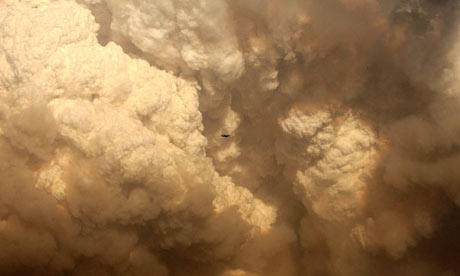
The deadly bush fires in Australia have released millions of tons of carbon dioxide into the atmosphere, equivalent to more than a third of the country's CO2 emissions for a whole year, according to scientists.

Thursday, February 12, 2009

The 10 worst packaging offenders

The 10 worst packaging offenders

Hat tip to Marinela Gabat for this story.

Microwave popcorn

Tuesday, February 10, 2009

Earth Hour 2009 - March 28

The official Earth Hour 2009 video.


OPSEU will be participating in Earth Hour again this year. Stay tuned for the details. 

Thursday, February 5, 2009

Energy saving tip - computers....

From Green Nexxus

Is your computer running up your power bill?

Does your computer run around the clock, 24/7? If so, you're missing out on an opportunity to knock a few dollars off of your monthly power bill...

The solution? You can use sleep and hibernate settings, so your system drops into a power-saving mode when not used for a few minutes. (Click Control panel - Power options). And for even more savings, shut down your computer when it is not in use, and plug everything into a power bar that you can click off to completely eliminate those trickles of phantom power.

McGuinty promises action on the environment...

McGuinty aims to create thousands of 'Green jobs'

Ontario Premier Dalton McGuinty said Tuesday a proposed Green Energy act would help create more than 50,000 new jobs over the next three years...

According to McGuinty the bill would help the government ensure our province's future by:
  • Supporting and expanding economic investment, thus building a stronger, greener economy with an estimated 50,000-plus direct and indirect jobs over the next three years
  • Expanding Ontario's use of clean and renewable sources of energy.
  • Better protecting our environment and combating climate change.
Considering McGuinty's move last year to place most of our eggs in the multi-billion dollar nuclear basket, we'll have to see the actual content of this Green Energy Act before making any judgments.

Stephen Chu lays it out....


Obama's new Energy Secretary Stephen Chu did not mince words when he laid out the dangers and challenges that lie ahead if serious efforts to tackle global warming are not addressed.

Obama's energy secretary outlines dire climate change scenario

Unless there is timely action on climate change, California's agricultural bounty could be reduced to a dust bowl and its cities disappear, Barack Obama's energy secretary said yesterday....

The language he used yesterday, though stark, was in step with a co-ordinated effort by Obama's officials and Democrats in Congress to project an image of consensus among policy makers in Washington on the need to move America away from fossil fuels and cut greenhouse gas emissions...

Obama ran a presidential campaign pledging to cut greenhouse gas emissions by 80% by the middle of the century. He made his first move to redeeming that promise last week when he ordered the environmental protection agency to reconsider its refusal, when Bush was president, to allow California and 13 other states regulate car exhaust emissions.

He also directed the car industry to produce cars that can achieve 35 miles per gallon by 2020...

But the extent of public support is less clear, and a number of leading Republicans remain implacably opposed to the idea that global warming exists. Recent opinion polls suggest that the economic recession has eclipsed concern about the environment.

Democrats insist that the downturn should not prevent action on greenhouse gas emissions. "If you want to fight this recession, do it by mobilising to become energy independent with clean energy and really save this planet," said Boxer.

But America's credit crisis appears to have stopped the growth of the wind and solar power industries in their tracks. Factories building components for wind turbines and solar panels have been letting staff go.
Public opinion, credit markets, dinosaur legislators. Seems there's no end to the reasons not to take action. Let's see if Obama will continue to stand up against the republican energy lobby that has a vested interest in NOT tackling global warming.

Electric avenue....

"We gonna rock down to Electric Avenue
And then we'll take it higher"
(Eddy Grant)
Plotting the long road to one million electric cars
(CNET) -- Meeting the Obama Administration's goal of putting 1 million plug-in electric vehicles on the road by 2015 will only happen with a coordinated set of policies and technology advances, according to an electric vehicle association...

On the technology side, batteries remain the biggest hurdle. The EDTA said the Department of Energy should fund to develop and test energy storage and fuel cells systems.

"Energy storage capability is the key to the success of the vehicles and also is the enabling technology for using renewable power as a transportation fuel," according to the EDTA's policy recommendation report.
Speaking of batteries (and lithium), this is an interesting article about Bolivia's lithium reserves. Aside from practical reasons such as access to resources, I hope that Obama will normalize relations with Bolivia.
Evo Morales hopes Bolivia's lithium reserves will allow it to join an exclusive club of countries like Venezuela and Saudi Arabia, whose natural resources make them indispensable to the global energy future...

Bolivia says it hopes to one day be the world's leading producer of lithium, and with at least 73 million metric tons waiting to be mined, the country is positioned to follow through.

Wednesday, February 4, 2009

Google earth goes underwater....

I thought I'd seen it all on the internet until I installed Google Earth when I read that you could explore underwater as well as the entire landmass of the planet. I was impressed. I could even see my house (which is not underwater fortunately).

Dive in! You will need to download an install Google Earth.

Google Earth allows web users to explore world's oceans in 3D

The Ocean tool combines renderings of underwater terrain with expert content from marine biologists and oceanographers, allowing web surfers to swim around virtual underwater volcanoes, watch videos about exotic marine life, read about nearby shipwrecks, and contribute photos and videos of their favourite diving spots.

Google said that humans had only ever explored around five per cent of the world's oceans, which cover more than 70 per cent of the earth's surface and contain 80 per cent of all life.

Eric Schmidt, Google's chief executive, said the launch of Ocean in Google Earth provided an opportunity to change people's perspective about the importance of the oceanic ecosystem in the overall health of the planet.

"In discussions about climate change, the world's oceans are often overlooked, despite being an integral part of the issue," he said. "Biodiversity loss in our oceans in the next 20 to 30 years will be roughly equivalent to losing an entire Amazon rainforest, but this goes unnoticed because we can't see it."...

Monday, February 2, 2009

Using satellites to abate climate change


Interesting development on the technological front.

New satellite techniques for looking at climate change

Using the novel polarimetric mode of the PALSAR synthetic aperture radar (SAR) aboard Japan’s ALOS satellite, Dr Shane Cloude of the UK-based AEL Consultants has mapped the biomass of Scotland’s forests. This marks the first time biomass data has been extracted over a large area using this sensor mode...

This information will assist politicians and non-governmental organisations in planning strategies for combating global warming through international monitoring and carbon sequestering.

Sunday, February 1, 2009

World Water Day - March 22

Tip of the hat to Dora Robinson for bringing this to our attention.

This year on World Water Day, we call attention to
the waters that cross borders and link us together.

The world’s 263 transboundary lake and river basins include the territory of 145 countries and cover nearly half of the Earth’s land surface. Great reservoirs of freshwater also move silently below our borders in underground aquifers.
Countries, organizations and individuals are asked to take some action on March 22 or in the days leading up to it in order to bring attention and pressure to bear on water-related issues. Check out the slide show here


In Toronto there is a planned screening of a new film,  Blue Gold: The World Water Wars, written and produced by American director Sam Bozzo.
It will be shown in 20 countries on March 22, World Water Day. The Toronto screening is tentatively set for Hart House.

"The idea is to get the audiences caught up in the story, and then they'll look for means of doing something about it," says Robertson.

Saturday, January 31, 2009

UnionBook


Check it out:

UnionBook is the social networking site for trade unionists. Unlike other social networks such as MySpace, FaceBook and Bebo, UnionBook is advertising-free, respects your privacy and is specifically designed to serve the trade union movement. Use it to meet up with friends online, post comments to discussion forums, create a blog, upload photos and so on.
If you sign up, make sure to join the group I created called "OPSEU" (if you're with OPSEU that is).

Friday, January 30, 2009

Winter cycling

Here's an interesting article in today's Toronto Star about winter cyclists in the city. There are a number of them out there on any given day, in any given weather.

Today at noon, winter cycling enthusiasts are gathering for the annual "Coldest Day of the Year Ride," organized by the city to highlight getting around on two wheels in the winter.

Winter cycling is feasible, but each time another big snowfall drops on Toronto, there is a challenging lack of traction on the road....
MICHAEL STUPARYK/TORONTO STAR
Leehe Lev plans ahead and takes it slow when cycling in the winter. 

This year, as a pilot project, the city is keeping the Martin Goodman Trail open all winter. The path, running from Woodbine Ave. to the Humber Bay Arch Bridge, is being treated like a city street, with dedicated snowplows clearing it after each snowfall....

The city will be monitoring the trail, he (Coun. Adrian Heaps - ed) says, to see "if the usage is there, which I'm sure it will be because I've seen it increase over the last few weeks. Then we're going to expand that to other east/west and north/south corridors.
I guess that's a way of saying that maintaining Toronto's bike paths is not currently much of a priority. Why not? Because the city must not think there are enough cyclists. But there probably aren't more cyclists because the bike lanes are not maintained.

Thursday, January 29, 2009

Site 41 campaign goes global

Sounds a bit like an X-Files episode but it's about the fightback to stop Simcoe’s County’s landfill Site 41. Thanks to Andrea Bowden for the update on this story from Tiny Township in the Midland area.


Site 41 fight gains momentum - Protest at Queen's Park draws help
A coalition of environmentalists and social justice activists told a news conference at Queen’s park this morning that they are launching a petition on Facebook calling on Premier Dalton MCGuinty and Environment Minister John Gerretsen to halt the controversial dump.

Danny Beaton, a Mohawk environmentalist, was joined by Elizabeth May, Green Party leader; Maude Barlow, senior adviser on water to the President of the UN General Assembly, and long-time Site 41 opponent Steve Ogden in calling on the government to stop the dump.

Simcoe North MPP Garfield Dunlop, who last year introduced a Private Members' bill in the Legislature aimed at stopping Site 41, said in an interview that he hopes people across Canada will respond to this latest effort...

Barlow, who is also head of the Council of Canadians, said it is a myth that Canada has An abundance of water resources. Twenty per cent of the municipalities in Ontario experienced water shortages last year.

"If the McGuinty government is serious about protecting Ontario’s water and reducing waste, it needs to revoke the (County’s) water taking permit immediately," she said.
Here's the facebook group - Stop Site 41

Native Plant Society Speakers' Series

While this may not seem like the time to be thinking about plants and gardens, the North American Native Plant Society is sponsoring a number of speakers over the next couple of months. All talks will be held at Toronto Botanical Gardens 777 Lawrence Ave., Toronto beginning at 7:30 p.m.

Feb 17, 2009
Gardening Trends
by Dennis Flannigan & Charles Kinsley

Mar 17, 2009
GREEN Gardening - A Joint Venture with Nature
by Ken Parker

April 7, 2009
Native Trees of Southern Ontario
by Todd Irvine

==============

And if you're in the mood to brighten up your place as we head into February, here's a winter blossom idea from Elaine at Vintage Gardener in Toronto's Distillery District.
Forcing Branches
It’s a stretch to believe that what seems like dead sticks in the middle of winter, will actually sprout not only lovely tender green leaves, but actually flower!

Choose a sunny day when the temperature is going up at least 5 degrees – better if it is 10. It can be very, very cold – well below zero – it just has to be going up. We are tricking the plant into thinking it’s Spring!

Cut the branches of any early spring blooming shrub or tree slightly longer than you intend for your arrangement, because you will need to give them another clean cut (about 3 inches) when you bring them inside. The stem will have already formed a scab at the cut as a natural protection to lock in whatever moisture or nutrition it has to sustain itself.

To get water up those stems – fast - there are two recommendations.
1.) Hammer the ends of the stems to soften the wood or
2.) give the branch a cut vertically up the stem, splitting it in half, exposing the inner stem to the water.

Place the branches in cool to tepid water – NOT hot – afterall in spring the plant would receive very cold water (we do not want to shock the poor things). Place the vase near sunshine – (but not in the direct sun or you will fry it)!

Wait anywhere from a few days to a week or so, changing the water weekly to avoid bacteria in the water – and amazing! Blossoms!!!

Favs: Forsythia, Magnolia, Apple & Quince.

Wednesday, January 28, 2009

The budget, the environment and infrastructure

Here's the text of yesterday's budget speech.

The word "environment" appears a grand total of twice:

We will invest new funds over the next five years to help Canadian farmers to innovate, to increase competitiveness, and to achieve greater environmental sustainability...

And to help all Canadian industries to reduce their impact on the environment, we will establish a new Clean Energy Fund.

We expect this funding will generate more than $2.5-billion in investments such as carbon capture and storage, over the next five years.
To be fair, "green" is also mentioned once.
And we will provide $1-billion for a Green Infrastructure Fund to support projects such as sustainable energy.
"Sustainable energy"? What is that? "Carbon capture and storage"? The conservatives panacea for global warming. What about renewable energy? One wind project in PEI. What about improving the energy grid? I guess that infrastructure doesn't count. Solar power? Not a mention. Geo-thermal. Nope. Reducing greenhouse gases? Cap and trade? Not in this budget. Global warming or climate change? Must not be a problem because it's not mentioned even once.

So, the Harper solution to the climate crisis is to spend  up to $200 million a year to support unproven and risky carbon capture technology that will take 10 years or more to develop (and may still not work) in order to allow the tar sands and other coal-fired plants to continue unabated. This is more delaying because Harper, deep in his heart, does not believe greenhouse gases are a problem - at least not a problem that government should take responsibility for.

A central problem with the budget is its basic assumption that the purpose of building infrastructure is to create jobs. Jobs are a positive product of infrastructure development but they should not be framed as the main the reason for it. Isn't the purpose of building infrastructure - both physical and social - to collectively improve our society by making services and programs available to the public?

It would be great to hear the opposition parties articulate a pro-public service position and to challenge Harper's philosophical underpinnings - defining the kind of society that we want and then fighting for it. This is a sign of just how deeply neo-conservative/neo-liberal policies have embedded themselves in the public discourse.

Harper's positioning of infrastructure development as a "necessary evil" to fight the recession is justification for all the years of infrastructure neglect. We should not buy into the underlying assumptions - particularly that good times are not the time to build infrastructure but a time for trickle-down, voodoo tax cuts.

This is not to say that the opposition parties don't make some good points about the deficiencies of the budget including the environment but talk is cheap. Ignatieff's decision to prop up Harper does not bode well for the environment. 

This budget and government should be defeated but that does not appear to be in the cards. 

Climate change and labour

Thanks to Karen Hawley at NUPGE for this article. The only thing that I think is missing is the obligation of trade unions to lead by example by reducing their own carbon footprints.

Could the trade union movement benefit from measures to tackle climate change?

By AsbjĆørn Wahl

Norwegian Union of Municipal and General Employees

Most problems in society are mainly social and political, even if at first glance they seem purely technical or scientific. This is a hard-earned lesson for the labour and trade union movement.  For example, workplace technology can be developed to serve different interests: the shareholders, the customers, the workers… In the end it is the actual balance of power which decides the solution and who it will benefit.

The threat of climate change is no exception. The solution of this problem requires, among other things, a huge amount of new technology. But the problem isn’t just about technology, it is a genuinely social and political issue. It is decisive, therefore, that the trade union movement develops its own climate change policies. We have to move from a reactive to a proactive position. In the end, it is a question of what kind of society we want to develop.

Facing up to the issues

So far, much of the trade union movement has hesitated when confronted with the problem of climate change, even though this situation has moved on significantly in recent years. There has been a tendency to deny the seriousness of the problem, and there has been some opposition against taking action as a result of a (fully understandable) fear of job losses.

   Our first challenge is therefore to face reality. We have to realise the overwhelming scientific proof that climate change is here, that human activities are crucial factors, and that this can be catastrophic. We must realise that the main reason for the problem is the burning of fossil fuel. This means the success factor of any measure is whether or not it contributes to reducing the burning of fossil fuel. The way we live and work will change radically over the coming years either as a result of action, or of inaction. Not to act, or to delay action, is not an option, but will only make consequences worse.

Failed markets need political control

The Stern Report, which reported to the UK government, concluded that “climate change represents the biggest market failure in history”. The on-going financial crisis represents another huge market failure in history. We cannot rely on those same failed market mechanisms to solve these crises.

   Both climate change policies and the financial crisis will need increased democratic control of the economy. That is exactly what we, in the trade union movement, also need for many other reasons. This means that the climate crisis not only represents a threat, but also new possibilities for the trade union movement. The on-going crises, together with neo-liberalism’s current crisis of legitimacy, have actually opened an array of opportunities waiting to be exploited.

   Trade unions thus have to prioritise climate change policies, but we have to embed these policies in a broader political context. We therefore also have to overcome the contradictions between specific workers’ immediate, sectoral interests and broader interests of workers as a whole. In other words, we are not only transport workers who face a change in work pattern; we are human beings confronting a potentially catastrophic event.

Redistribution of wealth

One thing is quite clear: there will be far-reaching changes. The question is therefore, how do we meet these challenges? Currently, workers and trade unions are on the defensive. We are under pressure. There is a tendency to individualise responsibility for greenhouse-gas emissions. All of us have to pay for the emissions we cause, it is said, even though those emissions in most cases are effects of the way society is organised and market forces are pushing.

   Of course emissions have to be reduced, even radically. This cannot, however, be left to each individual’s responsibility. Neither can it be done by implementing economic restrictions which in practise exempt the rich and wealthy from any change. Why should ordinary people support the necessary climate change policies under such conditions? People will never accept that rich people can continue to pay their way, that corporate interests are protected, while the costs are put on workers, consumers and taxpayers. What is needed, therefore, are collective political solutions in which policies against climate change are combined with a radical social redistribution of wealth. Anything short of that will prevent any solution to the climate crisis.

From defensive to offensive

Environmental organisations tell us we have to make sacrifices to save the climate and our planet. This is both incorrect, and strategically and tactically wrong. Climate change policies are not only a question of sacrifices, but of creating a better society for all. Roger Toussaint, president of Transport Workers’ Union Local 100 in New York, got it right when he, at a climate change conference, stated that: “Going green is not just about job creation, it is about an improved life for working people.”

   Serious climate change policies will give us an opportunity for progressive social change. Change will presuppose a more democratically managed economy. it will create millions of green jobs – particularly in public transport and in the production of renewable energy. It will reduce market competition and thereby also reduce pressure at work. It will make it necessary to shorten working hours to reduce the overexploitation of resources and allow a more just distribution of jobs across the globe. It will, if we do our job properly, hopefully reduce consumerism as a way of compensating other unmet needs in our societies, characterised by alienation and powerlessness. In short, social change is a precondition and a solution at the same time to stopping climate change.

   Furthermore, reduced greenhouse emissions will also reduce pollution in workplaces and communities. An enormous – and free – transfer of technology to developing countries will be necessary, both to reduce their increase in emissions and to lift two billion people out of poverty. Most importantly, climate change policies will secure the survival of human beings and the planet.

Alliances and social mobilisation

Global summits haven’t achieved social equality, jobs for all, decent working conditions, eradication of poverty, gender equality. It seems unlikely they will solve the problem of climate change either. Instead, we need a social and political mobilisation for alternative solutions built on solidarity, equality and peoples’ needs.

   The trade union movement will need to build strategic alliances with the environmental movement, and others. To do that, we have to overcome a couple of important weaknesses. Firstly, we have to ensure the environmental movements understand the role of social power (the class conflict). Secondly, we ourselves need to increase the understanding of environmental problems and the climate crisis in our trade unions. This can only happen if the two movements start to co-operate, exchange views and experiences and develop a friendly and constructive environment for discussion.

   An excellent example is the Blue-Green Alliance between the United Steel Workers and the environmental movement Sierra Club in the USA, which “is focused on restoring an additional element to the relationship between public policy and electoral politics … that of movement building … without strong, well-organised social movements mobilising along a society’s basic fault lines, meaningful change is unlikely.”

   Our long-term perspective must be to build the social alliances necessary to change society, not the climate. It is ambitious, but necessary and possible – and we will sit in the driver’s seat.

 In summary

·        Trade unions have to face up to the reality of climate change now

·        We need to be proactive, not reactive, to deal with the consequences

·        Climate change is part of a broader political context. We should look at the structure of society to find solutions.

·        We have to work with others, especially environmental organisations.

·        Climate change offers many possibilities: new green jobs, a greater role for public transport, less market competition… We must act now to seize these changes and make this a positive step for workers. 

Tuesday, January 27, 2009

Ottawa's "green infrastructure fund"

As part of their attempt to cling onto power, the Harper conservatives have been leaking budget details over the last week or so in order to pressure waffling liberals, including leader Michael Ignatieff, into supporting Harper's budget. Environment Minister John Baird, leaked details about what even the Star is calling a "so-called" green infrastructure fund.

Environmental reviews could be trimmed

The federal budget will include $1 billion for renewable energy, but the government has also signalled it wants to break down environmental roadblocks that stand in the way of a speedy economic recovery.

A so-called green infrastructure fund, part of $7 billion in stimulus funds that were revealed yesterday, is intended to spur the creation of clean energy infrastructure in the country, Infrastructure Minister John Baird says.
More to follow tomorrow after the details are released (or will they?). A couple of questions come to mind.

1) Carbon capture. Is this what they mean by "infrastructure"? Putting all the eggs into unproven and risky technology that will allow industry to continue to expand production of greenhouse gases.

2) "Environmental roadblocks." Code for even more deregulation.

3) Renewable energy. How much of this fund will actually be earmarked for solar, wind and geothermal?

4) Matching funds. How will strapped municipalities finance either green or non-green infrastructure funding?

5) How well can anyone do something that they don't believe in and have opposed their entire lives? This is the new, rebranded conservatives. There's always a catch.

Stay tuned.

Obama moves on auto fuel efficiency

Obama orders push to cleaner, more efficient cars

President Barack Obama opened an ambitious, double-barreled assault on global warming and U.S. energy woes Monday, moving quickly toward rules requiring cleaner-running cars that guzzle less gas - a must, he said, for "our security, our economy and our planet...." 
Obama also meant to set a tone with his promises: Science will trump ideology and special interests, attention will stay high even when gas prices fall.
Sounds good so far.
...Obama took a major step toward allowing California and other states to target greenhouse gases through more stringent auto emission standards, and he ordered new federal rules directing automakers to start making more fuel-efficient cars as required by law.
Something that Bush would vetoed in the past if I'm not mistaken. He was certainly hostile to the idea.
The auto industry responded warily. Reducing planet-warming emissions is a great idea, carmakers and dealers said, but they expressed deep concern about costly regulations and conflicting state and federal rules at a time when people already are not buying cars. U.S. auto sales plunged 18 percent in 2008.
Predictable. Automakers want their billions in bailout money and legislation to slash workers' wages, but they don't want to be accountable or responsible, but to carry on business as they have always done.
The auto industry responded warily. Reducing planet-warming emissions is a great idea, carmakers and dealers said, but they expressed deep concern about costly regulations and conflicting state and federal rules at a time when people already are not buying cars. U.S. auto sales plunged 18 percent in 2008.
So much for the honeymoon I guess as republicans continue their role as industry shills.

Advising Obama

A Green Agenda for the President's First 100 Days

Yale Environment 360 asked a wide-ranging group of environmental activists, scientists, and thinkers to answer the following question: If you were advising Barack Obama, what would you tell him are the most important environmental and energy initiatives that he should launch during his first 100 days?
This is a month old but still worth reviewing.

Monday, January 26, 2009

Year of the Ox


This is from animator and artist Mike Constable.

Economy or environment? It's a false choice

As the federal budget fast approaches, the public eye will once again be focused on Ottawa. Public polling has consistently shown that Canadians expect the government to deal with both issues and are not as easily distracted from the challenges facing us as the conservatives and energy industry would like us to believe.

Economy or environment? It's a false choice

By James Clancy, NUPGE National President
(reprinted from the NUPGE website)

Two major crises facing Canada and the world today are a deep economic recession and climate change. The Harper government thinks we have to choose either a strong economy or a clean environment. This is a false choice that sells our country short. We can and must have both. The current economic downturn actually presents us with a golden opportunity to unleash Canadian ingenuity and develop the green technologies that will renew our economy and confront climate change.

Our economy and the climate crisis are getting a lot worse – faster than predicted. The Harper government is paralyzed in the face of both crises because they obsessively focus on one problem without regard to, or not caring about, the impact on the other problem. The reality is that our economy and environment are and must always be linked. The solutions to the climate crisis are the same measures needed to renew our economy.

I believe it all starts with building a thriving green tech industry in Canada. Dynamic economies constantly reinvent themselves and grow through innovation. We need innovative made-in-Canada technologies that generate renewable energy, improve energy efficiency and strengthen conservation. The potential is enormous. According to the United Nations, the emerging green tech economy will be worth $4.2 trillion annually by the year 2020.

Those numbers are only going to grow. Canada stands to lose out if our federal government doesn’t do more to attract our share. Lots of other countries have already recognized the inseparable links between the economy and environment. Their governments have invested in research and development and partnered with innovative green technology companies. They are gaining a competitive edge and a better quality of life as a result.

Canada must do more to close the green innovation gap between us and the rest of the developed world. We have no reason to shrink from this challenge. We have the creativity, knowledge and resources to be at the forefront of this huge opportunity. But we need the Harper government to make the necessary financial investments that will propel a green tech industry forward in Canada.

What has happened to our economy, what is happening to our environment, forces all of us to face the folly of believing these concerns are in any way separate or individually “fixable”. Let’s hope the Harper government will soon see the (energy-efficient) light and drop its old way of thinking. This is the opportunity of our lifetime; to lead the transformation to a stronger economy and a cleaner environment. Precious time is slipping away. We can’t afford to let this opportunity slip through our fingers.
Thursday, January 22, 2009

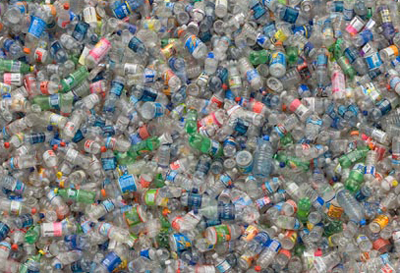
E. Pluribus Unum, 2009 - Chris Jordan

What is this? Click here to find out.


I wonder if OPSEU is anywhere to be found.

Ten Best Green Jobs for the Next Decade


Check out Fast Company's Ten Best Green Jobs for the Next Decade. Here's a list. Check out the article for the details.

  • Farmer
  • Forester
  • Solar power installer
  • Energy efficient builder
  • Wind turbine fabricator
  • Conservation biologist
  • Green MBA & entrepreneur
  • Recycler
  • Sustainability systems designer
  • Urban planner

Billion Tree Campaign

I'm surprised that I haven't run across this initiative before but here it is: The United Nation's Billion Tree Campaign.

The United Nations Environment Programme (UNEP) has launched a major worldwide tree planting campaign. Under the Plant for the Planet: Billion Tree Campaign, people, communities, business and industry, civil society organizations and governments are encouraged to enter tree planting pledges online with the objective of planting at least one billion trees worldwide each year. In a call to further individual and collective action, UNEP has set a new goal of planting 7 billion trees by the end of 2009. The campaign strongly encourages the planting of indigenous trees and trees that are appropriate to the local environment.
In 2008, OPSEU planted about 50 new indigenous trees on its Lesmill property. I added those trees to the database that they are keeping.

Wednesday, January 21, 2009

Greenpeace Ad - "You are my sunshine"

"Unbottle it" speaking tour

CUPE Ontario leader Sid Ryan and Senior Advisor on Water to the President of the UN General Assembly and national chairperson of the Council of Canadians, Maude Barlow are doing a number of speaking engagements across Ontario to bring to light the problems with bottled water.

Upcoming events include:

Midland - January 21Hear Radio Ad  
Waterloo - January 22Hear Radio Ad  
Owen Sound - January 23Hear Radio Ad  
Cobourg - January 27Hear Radio Ad  
Whitby - January 28Hear Radio Ad  
Toronto - January 29  Media
Peterborough - January 30Hear Radio Ad  

Tuesday, January 20, 2009

Obama sworn in


About 50 head office staff & visitors watched the Inauguration Ceremony in OPSEU's theatre.

I think it's all been said about Obama for the time being.

Turning the White House green


Lots of good ideas for Obama from Low Impact Living including reducing electricity consumption, using alternative energy, biodiesel vehicles and lighting:

Dear President Obama: Let's Turn The White House Green

Monday, January 19, 2009

Polar bear conference underway in Winnipeg


No common ground at first polar bear summit

Or so says the Globe & Mail in this article.

WINNIPEG -- They gathered in the spirit of piliriqatigiingniq - Inuktitut for seeking a common goal - but panel members at the federal government's first polar bear roundtable were hardly speaking with a single voice yesterday.

At issue was the health of Canada's 13 polar bear populations. On one side, researchers told federal Environment Minister Jim Prentice that the bears could be virtually extinct in a century. On the other, Inuit leaders spoke of bear populations doubling over the past 50 years, proliferating to the point of becoming a pest in many northern communities....

Most in attendance agreed on two main issues: a need to mesh Inuit knowledge with scientific research and acknowledgment that climate change is the polar bear's No. 1 threat because it is shrinking the seasonal ice cover that comprises the animal's winter feeding grounds.
So there was some common ground after all.

Steven Chu Reacts to the Citizen's Briefing Book

Wow. The Obama's new Secretary of Energy, Dr. Steven Chu, is actually a scientist who knows a thing or two. Very refreshing. In this video at Change.gov (Obama's transition website), Chu answers questions from the public about the environment including climate change, a smart electrical grid, alternative energy and technological change.

Saturday, January 17, 2009

8 years of Bush coming to an end...

From the economy to the environment, from human rights to New Orleans, few can deny that 8 years of Bush have been an unmitigated disaster for all except those that profited handsomely from his policies. Here's the fiercest Bush critic - Keith Olbermann's - take from MSNBC.

Friday, January 16, 2009

Green Budget Coalition

Check out the Green Budget Coalition's report and recommendations for the upcoming 2009 budget which could make or break the Harper government.

Who is the GBC?

The Green Budget Coalition comprises twenty of Canada’s leading environmental and conservation groups. These member groups collectively represent over 600,000 Canadians, through their volunteers, members, and supporters. The Coalition operates within four caucuses: Clean Air & Climate Change, Protecting Canada’s Natural Capital, Healthy Communities & Toxics Cleanup, and Ecological Fiscal Reform, and makes its decisions on a consensus basis.
Their recommendations focus on issus such as carbon pricing, water and watersheds, renewable energy, minerals and birds.

Thursday, January 15, 2009

Home wind turbines


A Wind Turbine for Every Rooftop?

hese days, there are more and more options for those of you who want a small wind turbine out in the yard or on your roof. They range from the standard to the somewhat bizarre, and come in sizes that can power several major appliances all the way up to your whole house and beyond. In the right conditions, wind power can be much more economical than other renewable energy options such as solar or geothermal.

Lead testing in Toronto

Given the number of older homes in Toronto, many of them have been found to have problems with excessive lead in the drinking water.

City lead testing garners praise

Provincially mandated testing of 100 homes last summer and fall found more than half exceeded the acceptable level of lead in drinking water. The city specifically targeted homes connected to water mains by lead water service lines, typically built before the mid-1950s...
There appeared to be less problems in the 905 area around Toronto which has both newer homes and newer infrastructure.
Richmond Hill tested 49 samples and none were above the safe limit.
Halton Region found less than 2 per cent above the acceptable level.
In Newmarket, only three samples have exceeded the standards.
In Durham Region, four homes tested above the limit in round two.
In a sidebar article, the following question were asked:
How can I reduce exposure?
Flush standing water out of pipes every morning by washing, flushing the toilet or letting water run for five minutes. Drink and cook with cold water, because hot water dissolves more lead. It's okay to bathe, swim or wash dishes and clothes, as lead isn't easily absorbed through skin or eyes.

How do I get my water tested?
Toronto offers free testing in homes with lead service pipes. Call 416-392-2894 or email waterqualityline@toronto.ca

Obama Inauguration

While this is not environment related, I find it to be fascinating nonetheless. The upcoming presidential inauguration has been designed to include people all across the US. They are not accepting money from lobbyists and vested interests.

Unlike any campaign I've ever seen, the Obama people have been careful to continue to build and nurture the network the election machine they built to get Obama into the Oval Office. I've already received a couple emails from Michelle Obama as well as "the man" himself, including one inviting me to watch this video.

Tuesday, January 13, 2009

Coal-fired electrical generation in Ontario


I received this email yesterday from the Ontario  Clean Air Alliance. 

----------------------------------

In 2008, Ontario’s total electricity consumption fell by 2.3% and our total coal-fired electricity generation fell by 18% according to statistics released by the Independent Electricity System Operator today. (Their news release may be viewed at http://www.theimo.com/imoweb/media/md_newsitem.asp?newsID=4458).

On a less positive note, Ontario’s net electricity exports doubled in 2008.  As a result, approximately 47% of Ontario’s coal-fired electricity generation was exported.

Please contact Ontario’s Energy Minister George Smitherman and ask him to ban unnecessary and polluting non-emergency coal-fired electricity exports to the U.S.A.  Minister Smitherman can be reached atGeorge.Smitherman@ontario.ca, 416-327-6758.

Please pass this message on to your friends.

Thank you.

Jessica Fracassi, Communications & Membership Director
Ontario Clean Air Alliance
402-625 Church St, Toronto M4Y 2G1
Phone: 416-926-1907 ext. 245
Fax: 416-926-1601
Email: jessica@cleanairalliance.org
Website: www.cleanairalliance.org 
Website: www.OntariosGreenFuture.ca

Monday, January 12, 2009

Addicted to Plastic

While I missed this documentary that aired on CBC's Passionate Eye, try to catch Addicted to Plastic the next time it airs. 


Monday, January 5, 2009

Planet Friendly Calendar of Green Events

I linked to this last year but thought I'd do so again to provide you with the latest list of green conferences and events across Canada and parts of the USA.

Sunday, January 4, 2009

Tennessee coal sludge disaster - drinking water poisoned

Despite assurances from the Tennessee Valley Authority which runs the coal burning power plants that dumped a billion gallons of sludge onto 400 acres in Harriman, Tennessee, independent water testing shows super-high levels of mercury, lead and arsenic in the water.

Tests Show Pollution Near Ash Spill

Preliminary water tests from rivers near a huge coal ash spill in Tennessee show elevated levels of pollutants such as mercury and lead, an environmental group said yesterday...

Arsenic levels from the Kingston power plant canal, for example, tested at nearly 300 times the allowable limits in drinking water. A sample from 2 miles downstream revealed arsenic at about 30 times the limit.

"Although these results are preliminary, we want to release them because of the public health concern and because we believe the TVA and EPA aren't being candid," Robert F. Kennedy, Jr., chair of the Waterkeeper Alliance, said in a release.

Modernizing water infrastructure

While this story is US-based, there are many similarities with Canada.

Murky Waters: Why Privatization Is Not the Solution to Fixing America’s Aging Water Infrastructure Systems by Wenonah Hauter

The country's clean water infrastructure can be thought of as a circulatory system. Rather than the blood that keeps our bodies alive, our local utilities pump the water that keeps our society functioning. Pipes act as arteries, carrying fresh water to be used by people and businesses, then as veins, carrying dirty water away. Wastewater treatment facilities serve as the kidneys and the liver, cleansing impurities and waste. Like the circulatory system, water infrastructure is largely out of sight and out of mind until it breaks down...

Waterworks plant.
While our water is among the safest in the world, many public utilities struggle to meet federal clean water standards and to maintain and modernize water systems. In 2008, the federal government estimated spending (funds that would be released to the public) $45.5 billion on a highway trust fund and more than $12 billion on an air transport trust fund, yet we have no trust fund to safeguard our nation's water...

While public utilities have made great strides to address the infrastructure crisis, they still need help. We need to plan ahead for future generations and create a dedicated source of public funding so that communities across America can keep their water clean, safe and affordable. A Clean Water Trust Fund would realize this need while relieving already over-taxed state and municipal coffers from the burden of water infrastructure repairs. We currently have trust funds for botanic gardens and wildlife habitat restoration, why not water?

Getting off the bottle....

This is a good recap of the motivations behind OPSEU's moves last year to phase out bottled water and to boycott Coca-Cola (page 17 - ed).

My New Year Resolution is to Lose My Bottle – and Quit Coke - by Johann Hari
By the time you read this, my head will be thump-thumping - but this is not a standard-issue New Year's Day hangover. No. My New Year's resolution is to finally give up my addiction to two liquids that are trashing the lives of some of the poorest people on earth: bottled water, and Coke. In 2009, I'm determined to lose my bottle...

Yes, it will be annoying for me not to have my favourite drinks. But it's considerably more annoying to watch your children die of typhoid while your fresh water is being shipped off for the rich to quaff, or to be shot in the face for running a trade union. In 2009, I don't want to drink oil, or blood.
Plastic bottles in landfill

Protesting Coke

 
Add to Technorati Favorites All-Blogs.net directory Add to Bloglines Who links to me?